Cu Chi Tunnels Day Trip: Walking Through War History
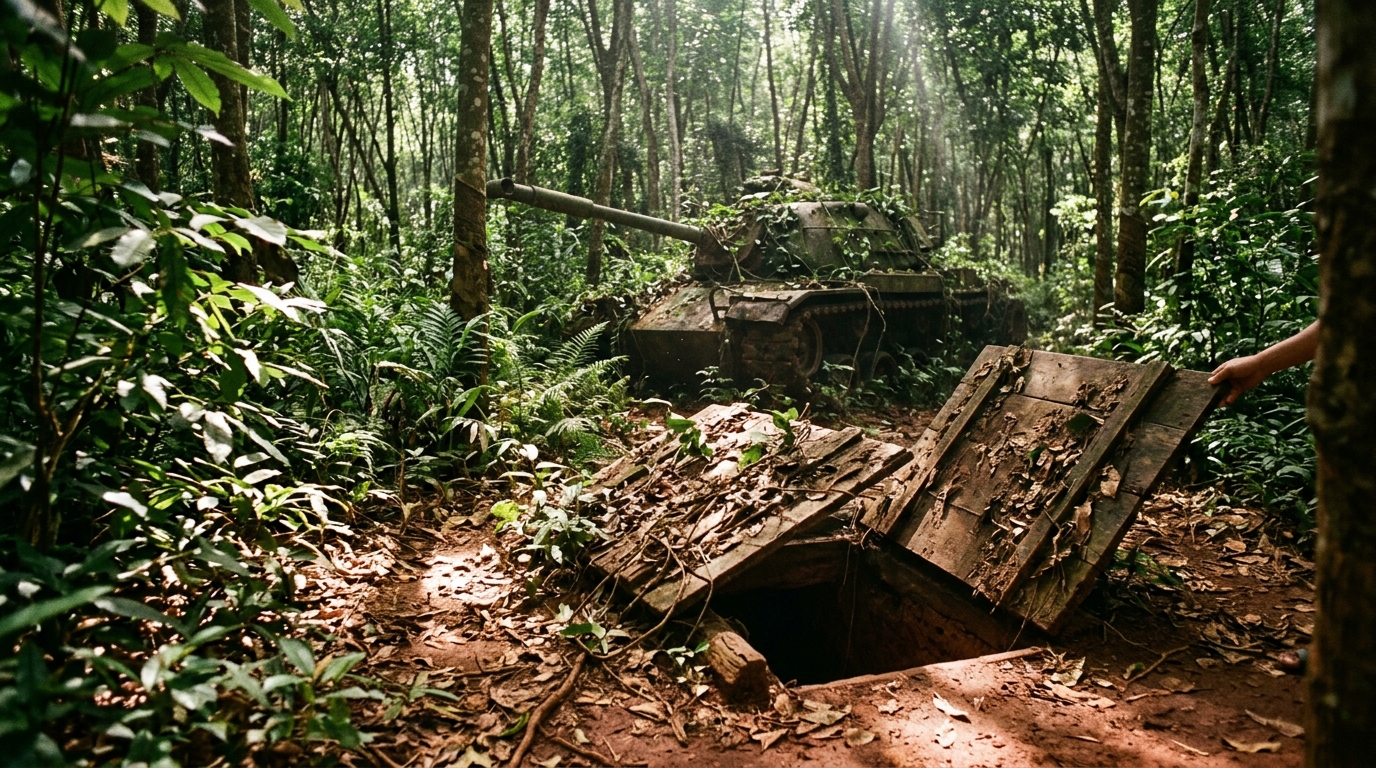
Roughly seventy kilometers northwest of Ho Chi Minh City, hidden beneath a seemingly ordinary stretch of rubber plantations and cassava fields, lies one of the most remarkable engineering feats of the 20th century. The Cu Chi Tunnels are a subterranean network that once stretched more than 250 kilometers, sheltering Viet Cong fighters and their families during decades of conflict against French and American forces. Today, a Cu Chi Tunnels day trip is an essential pilgrimage for anyone seeking to understand the Vietnam War from the perspective of those who lived it underground. Visiting the tunnels is a sobering, eye-opening counterpoint to the modern energy of Saigon, where war memory can feel abstracted by gleaming skyscrapers and rooftop bars. Cu Chi is not a museum in the traditional sense; it is a preserved battlefield where ingenuity, hardship, and resilience are still etched into the red earth, and standing in the jungle above knowing what labyrinth lies beneath your feet is profoundly disorienting.
There are two main Cu Chi sites open to visitors, and choosing between them can shape the entire experience. Ben Dinh is closer to Saigon, more heavily developed, and by far the most popular, meaning it can feel crowded and theatrical, especially midmorning when tour buses arrive en masse. Ben Duoc, about fifteen kilometers further, is quieter, feels more authentic, and attracts primarily Vietnamese visitors paying respect to a nearby memorial temple. Both sites feature the same core experiences: crawling through widened sections of original tunnels, inspecting trap doors camouflaged beneath fallen leaves, and viewing reconstructed underground kitchens, hospitals, and command rooms. For a more reflective and less theme-park atmosphere, choose Ben Duoc over Ben Dinh. The tunnels themselves have been enlarged for Western body frames, yet even these "tourist-sized" passages feel unbearably tight, hot, and airless. A fifty-meter crawl is usually enough to grasp, viscerally, what a decade of life in a tunnel must have demanded from the human spirit.
Beyond the tunnel entrances, the site reveals the astonishing resourcefulness of the guerrilla fighters. Guides demonstrate spike-filled trap pits, pressure-triggered crossbows, and even sandals crafted from recycled tire rubber, each a testament to a war waged with almost nothing against the most technologically advanced military of its era. Rusted American tanks and bomb craters are left in situ, slowly being reclaimed by jungle, creating a haunting open-air archive. The most striking exhibit is the underground kitchen with its ingenious smoke-diffusing vents, which scattered cooking fumes through the forest canopy so faintly that surveillance planes could not detect them. For an additional fee, visitors can fire vintage weapons like AK-47s and M16s at a nearby shooting range, though many travelers find this jarring and opt to skip it. The real value of the visit lies in listening carefully to guides, many of whom grew up in Cu Chi and carry family memories of the war.
Logistically, a Cu Chi Tunnels day trip is easy to arrange and can be tailored to any budget. Group bus tours from Saigon are the cheapest option, typically costing between $15 and $25 and including transport, entrance fees, and an English-speaking guide. Half-day private tours offer more flexibility and time at the site itself. The most atmospheric way to reach the tunnels is the speedboat along the Saigon River, a two-hour journey that passes water buffalo, fishermen, and river villages before docking directly at Ben Dinh. Combining Cu Chi with the Cao Dai Holy See in Tay Ninh makes for a full and rewarding day, though it requires a 5 a.m. start. Wear long trousers and closed shoes, as the jungle floor is red clay dust that stains everything, and bring strong insect repellent during the rainy months. Avoid visiting Cu Chi in the peak midday heat between 11 a.m. and 2 p.m. when humidity makes the tunnel crawls genuinely suffocating. This is history you feel in your body, not just your mind, and that is precisely what makes the journey unforgettable.
Plan Your Vietnam Adventure
Discover our curated tours and airport services for a seamless travel experience.