Pho: The Soul of Vietnamese Noodle Soup Culture
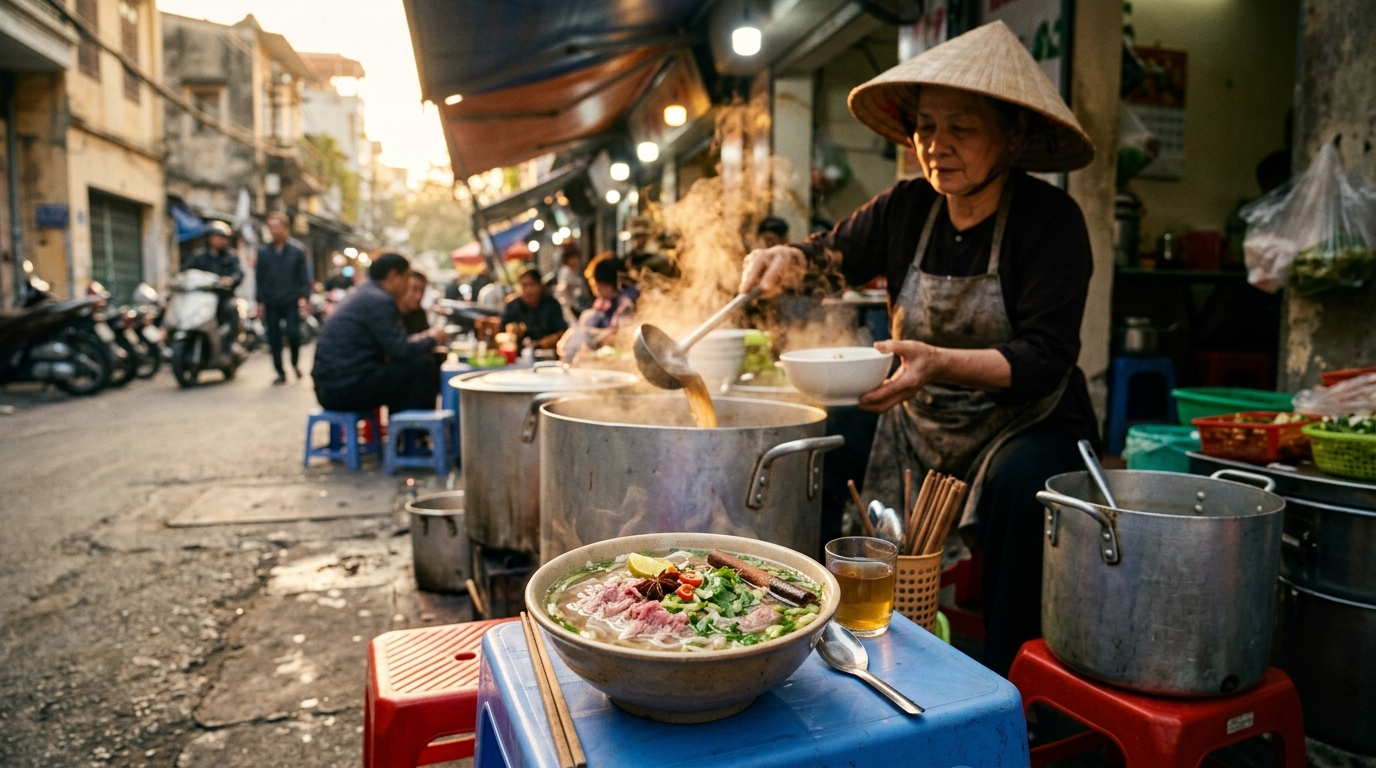
Before the sun has fully risen over Hanoi, before the first motorbikes swarm the streets, a different kind of awakening is already underway. Steam curls up from dented aluminum pots the size of washtubs, carrying with it the scent of slow-simmered beef bones, charred ginger, star anise, cinnamon, and toasted cardamom. This is the smell of pho, the fragrant noodle soup that has become a global ambassador for Vietnamese cuisine and, for most Vietnamese, the emotional anchor of the morning. Pho is not merely a dish; it is a daily ritual, a family recipe, and a cultural inheritance passed quietly from grandmother to granddaughter over sticky kitchen counters. Understanding pho requires accepting that it is eaten primarily at breakfast, not lunch or dinner, throughout most of Vietnam. The broth, simmered for anywhere between six and twenty-four hours, must be sipped at its freshest, and good pho houses often sell out by 10 a.m., their pots scraped clean and rinsed ready for the next dawn.
The geography of pho is a story of migration and adaptation. Most food historians trace pho’s origins to the early 20th century in Nam Dinh province, about an hour south of Hanoi, where French colonial demand for beef created a surplus of bones that street vendors began transforming into soup. The northern version—pho bac—remains austere and purist, with a crystal-clear broth, wide flat rice noodles, thin slices of rare beef or poached chicken, and garnishes limited to spring onion, cilantro, and perhaps a splash of lime. After 1954, when Vietnam was divided and a wave of northerners fled south, pho traveled with them. In the hot, herb-rich landscape of Saigon, the recipe bloomed, acquiring hoisin sauce, sriracha, bean sprouts, Thai basil, and sawtooth coriander. The southern pho of Saigon is sweeter, more elaborate, and comes with a mountain of fresh herbs on a separate plate. Neither version is more authentic than the other; they are simply different chapters of the same long story, and arguing which is superior is a national pastime in itself.
Ordering pho is a small art that rewards a little homework. The two foundational choices are pho bo (beef) and pho ga (chicken), with beef being the default assumption in most of the country. Within pho bo, you must specify your preferred cuts. Tai is thinly sliced raw beef that cooks instantly in the broth as it is poured over the noodles. Nam is well-done flank, gion is crunchy tendon, gau is fatty brisket, and vien refers to springy meatballs. Most pho houses list these as a string of abbreviations on a wall-mounted sign, and ordering tai-nam-gau-vien gets you the full experience in a single bowl. Squeezing fresh lime, tearing herbs with your hands, and adding chili only at the very end preserves the integrity of the broth, which is the true test of any pho chef. Pouring hoisin and sriracha directly into the bowl, though popular with tourists and southerners, is considered sacrilege in strict Hanoi pho households, where a small side dish is provided for dipping meat only.
For travelers hunting the best pho, Hanoi remains the undisputed mecca. Legendary names like Pho Thin Lo Duc, Pho Bat Dan, and Pho Gia Truyen Bat Dan have been serving the same recipe for generations, often from hot, cramped shopfronts where customers share plastic stools and slurp shoulder to shoulder. In Saigon, Pho Hoa Pasteur and Pho Le are iconic. Beyond the famous names, the most memorable bowl of pho is often the unnamed one found by accident on a small side street at 6 a.m., served by an elderly woman whose family has made this same soup since before the war. Seek out pho vendors with long queues of Vietnamese customers and no English menu for the most authentic experience. Finally, remember that good pho is deeply seasonal; in northern winter, the steaming bowl warms your hands and fogs your glasses in a way no summer bowl ever can. Eating pho at sunrise, perched on a low plastic stool beside the cook, is one of the defining moments of any trip to Vietnam.
Plan Your Vietnam Adventure
Discover our curated tours and airport services for a seamless travel experience.