Phu Quoc Island Guide: Beaches, Pepper Farms and a 30-Day Visa Exemption
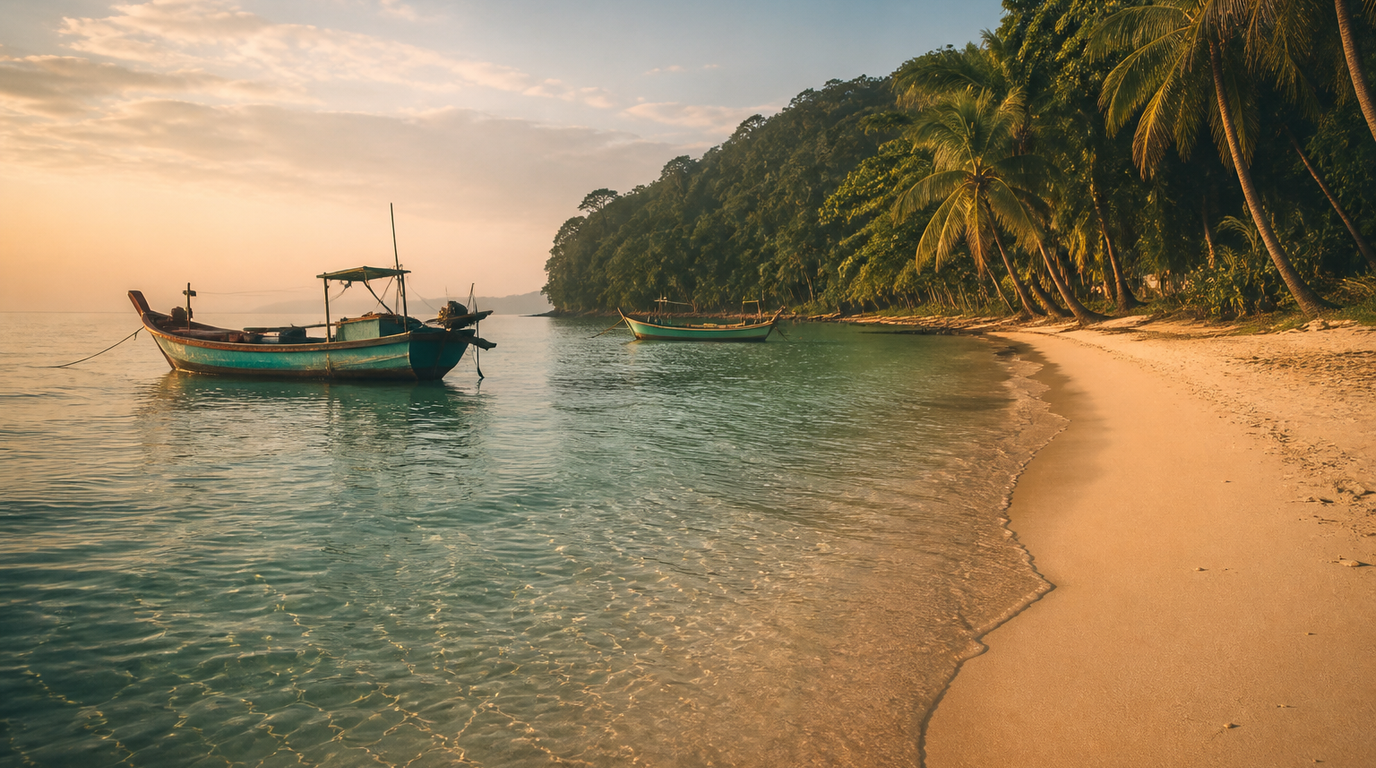
Phu Quoc announces itself from the air. As the plane banks over the Gulf of Thailand, the mainland has long since disappeared and what rises instead is a teardrop of dense green forest fringed with sand so pale it looks bleached. This is Vietnam’s largest island, closer to the Cambodian coast than to Ho Chi Minh City, and for years it was the country’s best-kept secret — a place of pepper farms, fish sauce barrels and fishermen, reachable only by a slow boat from Rach Gia. That version of Phu Quoc still exists if you know where to look, but it now shares the island with international resorts, a cable car that crosses the sea, and an airport receiving direct flights from Seoul, Bangkok and beyond. What makes the island genuinely unusual for travellers is a quirk of policy: most nationalities can stay on Phu Quoc for up to 30 days without a Vietnam visa, provided they arrive on a direct international flight and remain on the island.
The beaches are the obvious starting point, and they are not all alike. Long Beach, or Bai Truong, runs for some twenty kilometres down the western shore and is where most of the resorts, sunset bars and the island’s reliably theatrical evening skies are found. Sao Beach on the southeast coast is the postcard — a short crescent of powder-white sand and water that shifts from clear to jade — and it rewards an early start, before the day-trip buses arrive around eleven. Ong Lang, halfway up the west coast, is the quieter compromise, rockier in places but far less developed. South of the island lies the An Thoi archipelago, a scatter of fifteen or so islets with the clearest water in the region and the island’s best snorkelling. The Hon Thom cable car, at nearly eight kilometres, is among the longest over-sea cable cars in the world, and the twenty-minute crossing above fishing boats and turquoise shallows is worth the ticket on its own.
Inland, Phu Quoc is greener and stranger than its resort strip suggests. More than half the island is protected as Phu Quoc National Park, a UNESCO-listed biosphere reserve of tropical forest, streams and hornbills, crossed by red-dirt roads that are a pleasure on a rented motorbike and a misery in heavy rain. The island’s two most famous exports are worth seeking out in person. Phu Quoc fish sauce carries a protected designation of origin, and the warehouses in Duong Dong are cathedral-like inside, lined with wooden vats of fermenting anchovy that are aged for a year or more. The pepper farms in the island’s east sell green, red and black peppercorns straight from the vine, and many pair the visit with a tasting of sim wine, a sweet ruby liquor pressed from rose myrtle berries. In the evening, Dinh Cau night market in Duong Dong is the reliable choice for grilled scallops, sea urchin and whole fish picked from a tank.
Practically, timing matters more on Phu Quoc than almost anywhere else in Vietnam. The dry season runs from November to March, with calm seas, dependable sun and the island at its busiest around Tet and Christmas; from May to October the southwest monsoon brings heavy afternoon rain, rough water and cancelled boat trips, though prices fall sharply and the forest is at its most vivid. Three to four nights is enough for a first visit — a beach day, an An Thoi boat trip, and one day inland for the park, the pepper farms and the fish sauce works. If Phu Quoc is a stop within a longer Vietnam itinerary rather than a standalone escape, remember that the visa exemption applies only while you stay on the island: the moment you fly onward to Ho Chi Minh City, Hanoi or Da Nang, you need a valid e-visa in hand before you board.
Plan Your Vietnam Adventure
Discover our curated tours and airport services for a seamless travel experience.