Vietnam Safety Guide: Avoid Common Tourist Scams
Vietnam is, by almost any honest measure, one of the safest countries in Southeast Asia for international travelers. Violent crime against tourists is extraordinarily rare, the political environment is stable, and the Vietnamese people are overwhelmingly warm, patient, and helpful to visitors who make even the smallest effort to engage respectfully. That reassuring headline, however, does not mean Vietnam is free of everyday nuisances. Like every popular tourist destination on earth, it has a well-documented catalogue of small-scale scams, overpricing schemes, and opportunistic pickpockets, concentrated mostly around high-tourism zones in Hanoi, Hoi An, and Saigon. The good news is that essentially none of these scams are dangerous; they are about your wallet, not your safety. Armed with a small amount of knowledge, the average traveler can avoid 95% of Vietnam’s tourist scams without altering their trip in any meaningful way. Awareness, not paranoia, is the correct mindset, and the goal of this guide is to name the common tricks so you can recognize them the moment they begin.
Transportation scams are by far the most common category, starting the moment you leave the airport. Unmetered taxis outside Noi Bai (Hanoi) and Tan Son Nhat (Saigon) airports are notorious for quoting inflated flat rates or, worse, using rigged meters that spin faster than they should. The solution is simple: use only Vinasun or Mai Linh taxis (the two reputable metered companies, color-coded white and green respectively) or, better still, order a Grab car through the app, which locks in a transparent fixed price before you enter the vehicle. Once downtown, avoid cyclo drivers who offer a cheap half-hour tour and then demand ten times that price at the end; always agree on the full price and route in writing before climbing aboard. Never hand your phone to a stranger for a photo or to show directions, as the occasional snatch-and-run on a passing motorbike is the one street crime that does occur in Saigon. The Ho Chi Minh City districts of Pham Ngu Lao and District 1 are the main hotspots, though incidents remain rare. Keep your bag on the inside of the sidewalk, away from the road.
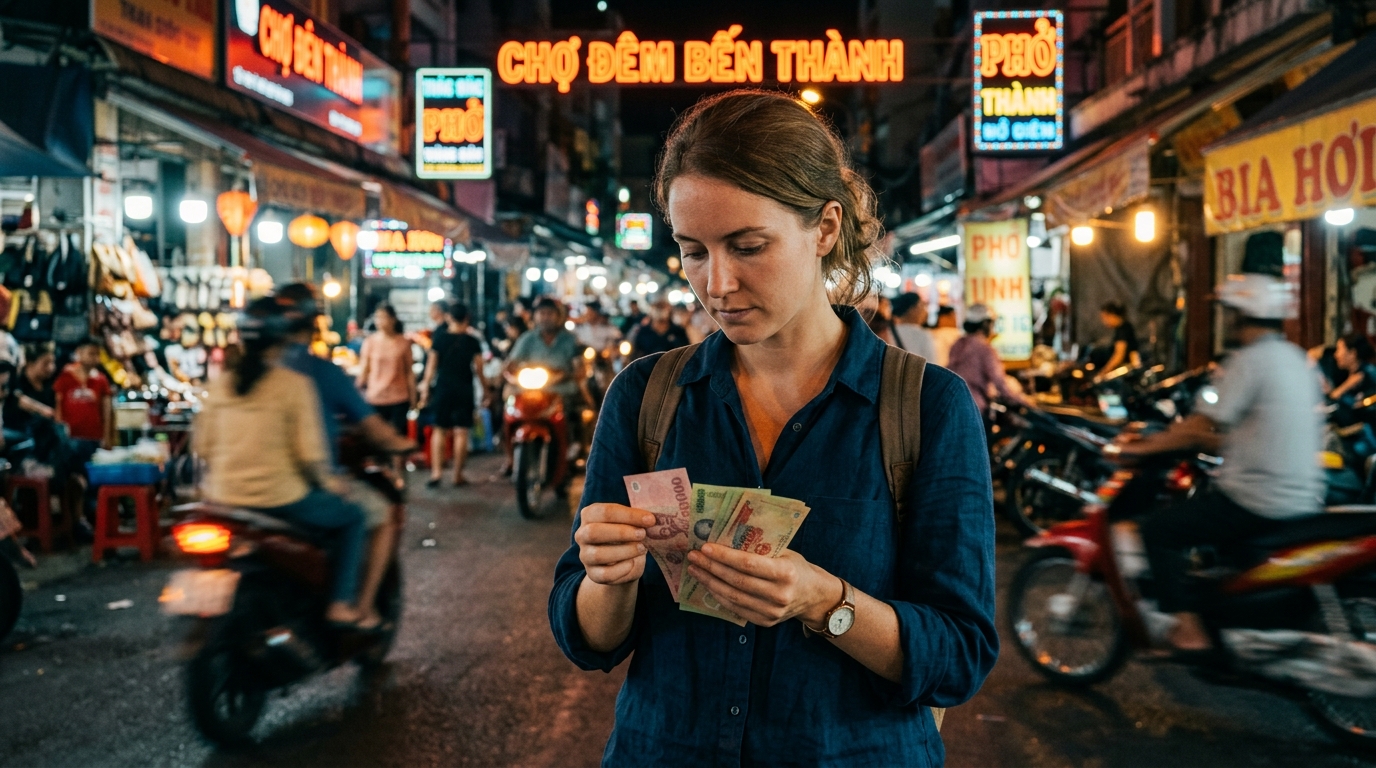
Retail and money scams are the second major category and typically involve overcharging, short-changing, or swapping currency notes. In street markets, the first price quoted to a tourist is almost always inflated two or three times the true local price; bargaining is expected, not rude. A small number of unscrupulous vendors short-change by handing back 20,000 VND notes while claiming they are 200,000, exploiting the similarity of Vietnamese banknote colors. Always count change carefully in the light before stepping away from any transaction, especially with taxi drivers and street stalls. Restaurant bills in the tourist districts of Old Quarter Hanoi and District 1 Saigon occasionally include mysterious extra charges or marked-up drinks; reading the menu prices carefully and asking about any unmarked items (especially wet tissues and appetizer peanuts) prevents the most common inflation. Fake tour agencies selling knockoff Halong Bay or Sapa packages at deep discounts have been a persistent issue for a decade; sticking with operators that have verifiable offices, solid Google reviews, and published TripAdvisor profiles is the simplest shield.
A final set of scams rely on manufactured friendship or misplaced sympathy. The "friendly local" who strikes up a conversation about your country and then offers to take you to a nearby bar is almost always leading you to an establishment where two beers cost $200. Similarly, a shoeshine boy who kneels and "repairs" your shoe without warning will demand an enormous fee for the unsolicited work. A polite but firm "no thank you" and continued walking are the only correct responses to any unrequested service offered on the street. Pickpocketing in crowded markets like Ben Thanh and Dong Xuan is opportunistic; a front-worn daypack and a money belt for passports essentially eliminate the risk. Leave your passport, main credit card, and most of your cash in the hotel safe and carry only what you need for the day. With these everyday precautions in place, you can enjoy Vietnam exactly as it deserves—as a warm, welcoming, and genuinely safe destination where the only thing you are likely to lose is your heart to its food, people, and extraordinary landscapes.
Plan Your Vietnam Adventure
Discover our curated tours and airport services for a seamless travel experience.